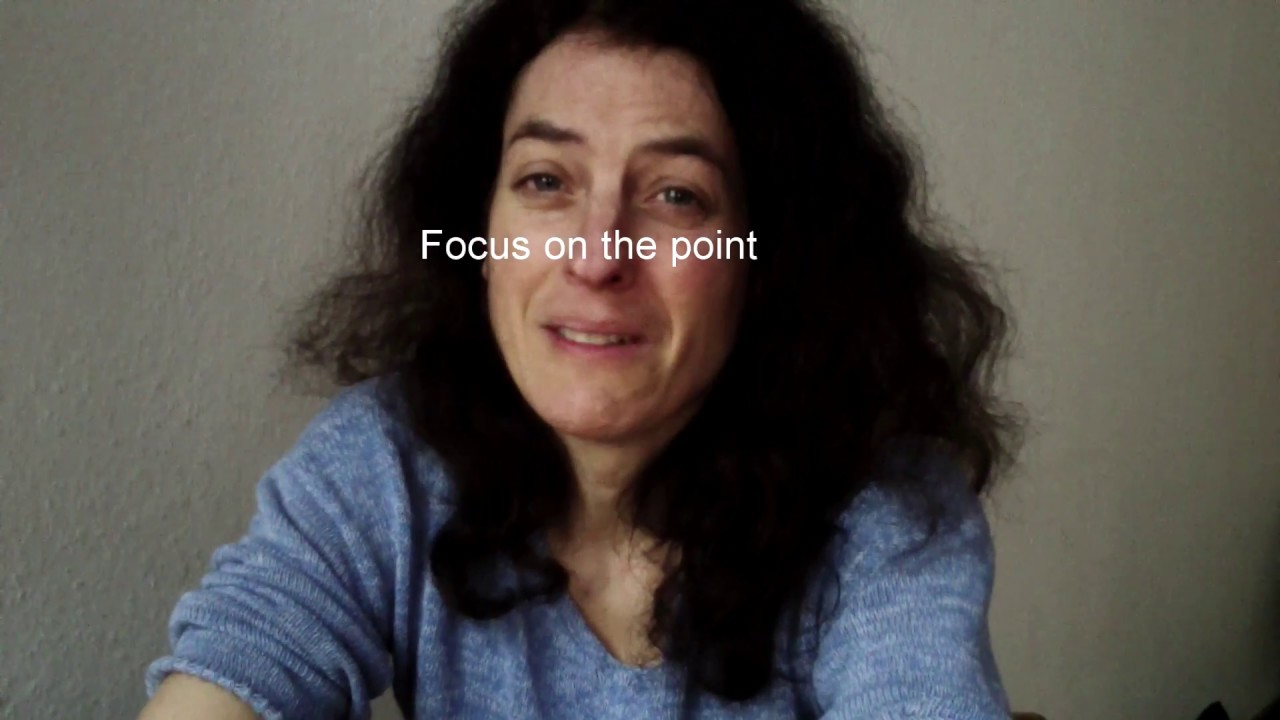
Between the sweeping phrase "the internet of things," and Sunt lacrimae rerum et mentem mortalia tangunt — "there are tears in things, and mortal things touch the mind" (Virgil, the Aeneid) — a close friend showed up at my studio, destroyed. His father had just died — a father, moreover, with whom he'd had a complicated relationship, violent at times, whom he had hated for years, but whose love had always been more intense — and whose death still hurt him terribly. I held him. I told him his father, conflict or not, would always be standing behind him. And it was in this triangle — the tech-news phrase, the Aeneid, and a deep friendship — that Die Tränen der Dinge was born.
The project began with a first letter offering three specific ways to approach the core of the piece, as though they were options for reading a score — except this "score" was a form of crying. Their crying. That core.
The letter offered three paths, framed as equally valid, theirs to choose: the emotional route, true, real crying; the technical, actorly route — breath, posture, eyes, the actor's craft, and control — supported by a video guide I made with the help of actress Tanja Watoro; and a third: a combination of the two. "You decide," the letter said. "These are suggestions you may consider, or not."
I knew that whoever chose the technical route would likely do it badly (they are musicians, not actors) — and that failure, that visible seam between technique and truth, was material that interested me. (As in Teleprompter, where six musicians were told only to read a text as an elderly "African" villager surviving a lion attack, and produced, unintentionally, everything from neutral delivery to outright mimicry — the mechanism on trial, not the performer.) Here I wanted the same exposure applied to crying — a diverse palette, some genuine, some botched. Isolated coherence, 14 karat.
The replies, when they came, for reasons beyond my understanding, read the request very differently. Some felt the letter crossed a real line, an intimacy that wasn't theirs to hand over. Others were drawn precisely to that discomfort, feeling that a sentiment so guarded by upbringing and modesty was exactly the one worth examining. Three agreed, but the proportion didn't work for me: the video needed four windows, and 3:1 felt unbalanced against the 2:2 symmetry I wanted. I negotiated with one of the three to step aside, which let me bring in two friends outside the ensemble to complete the cast — two non-invited, almost imposed performers, two non-paid emergency exits — a decision that created some tension with the artistic direction.
The piece keeps four performers exposed throughout: the two musicians from the ensemble, the accordion among them, and the two friends brought in from outside, all working with or near the Blind Box — the isolation chamber where touch itself becomes the only available sound. The rest of the ensemble played minimal textures, and that textural silence was mirroring the whole creative and production process.
Without meaning to, the piece "behaved" like John Wheeler's "Black Hole": everything that came near it — the letters, the resistance, the guests, meeting my sad friend, even my later friction with the ensemble — stopped being an external background and became part of its mass. This is what tears do, and they fall all around us: in buildings, behind airplanes, into relationships; yes, these are the tears of things.